
Taking a look at street photography layering
A short description of how layering can change your street and general photography.
T Reeves
11/12/20252 min read
Layering
In simple terms, layering is what adds the illusion of three dimensions to flat, two-dimensional photographs. Layering in photography is often subtle and not something the average viewer notices consciously.
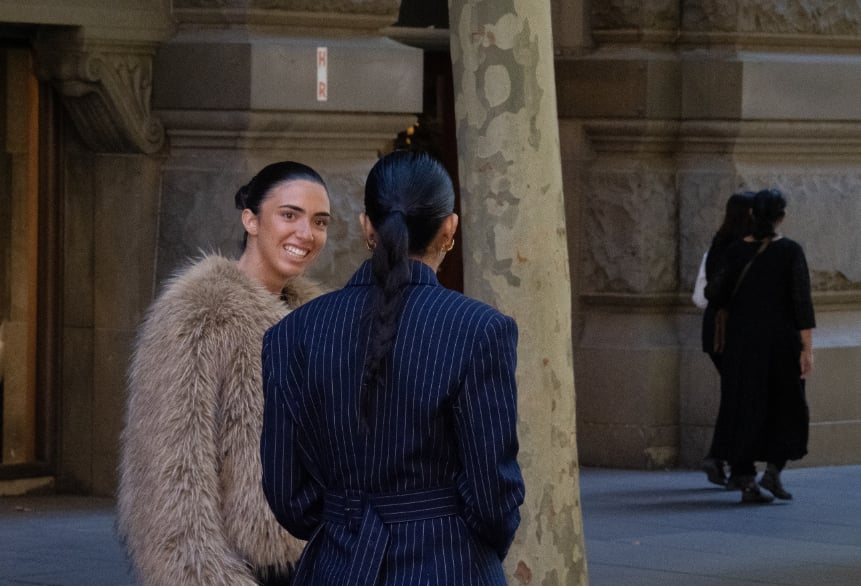
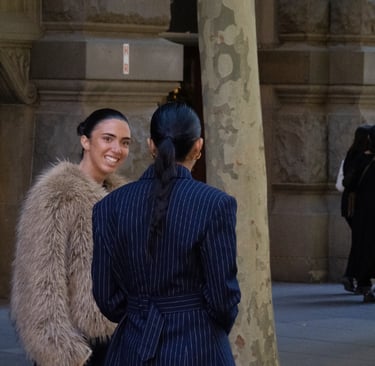
Layering in photography means creating a frame with multiple (usually two or three) subjects at different distances from the lens. For example, looking at Fig. 1 below, the first layer is the man in the foreground, while the second layer consists of the man and woman in the background. In Fig. 2, it can be said that there are three or even four layers: foreground, midground, and background left.
Why are photographic layers important? Because they add depth to an image and create photo complexity and dynamics. This doesn't mean to say that every image needs layers, nor that because layers are present, they automatically lead to a successful photograph. But they are definitely a useful technique.
The focal length of your lens is of significance, and the ideal one is 35mm equivalent. This is due to its ability to include everything of importance in the frame, the relationship of those elements, and its natural appearance.
Jorge Delgado-Ureña, of The Raw Society, recommends we begin by selecting the background, not the foreground which might seem the intuitive approach.
Looking at Fig. 3 below, there is only one layer: the flowers, woman taking a photo, and the woman behind her. Despite my attempt to produce an interesting photograph, I failed, in part, due to there being only one layer.
See this video from Gil Kreslavsky for a detailed view of street photography layering:
Move in Close
If you shoot far away or use a zoom lens, most scenes will have layers in them; you just won’t perceive them, as the layers blend. When closer in, the more pronounced the layers will be felt. This brings the viewer into the scene.
When close, the foreground gains in importance in a layered shot. Without a strong foreground subject, the layered shot usually feels incomplete, even if the other layers are strong.
Be Patient
When composing a frame with multiple layers, have patience. At first sight, the scene may appear incomplete - perhaps it needs another layer or an addition to an existing layer. Scan beyond the scene to see what else is about to enter it.
What to Focus on
An important part of layering is deciding which layer to focus on and how deep the depth of field should be. Do you want to focus on the foreground with a narrow depth of field? Typically, the layers should all be in focus, as the whole scene is important, unless there is a subject very close to the camera. Therefore, it makes sense to use an aperture of between f5.6 and f11 and to focus about one third into the scene.
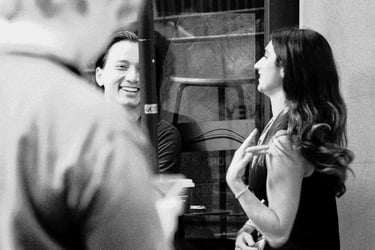
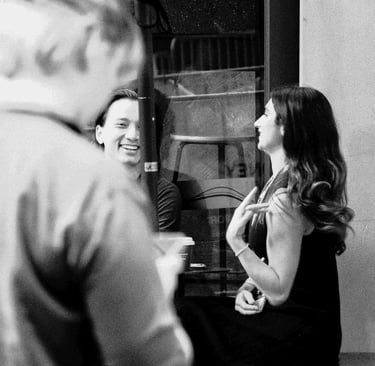
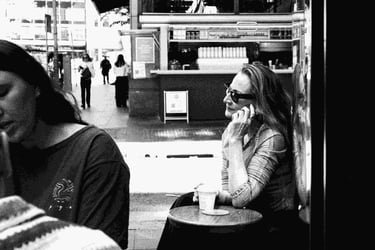
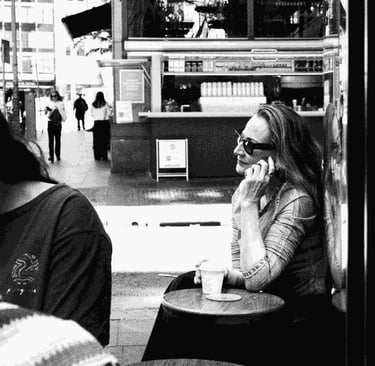
Fig. 1
Fig. 2
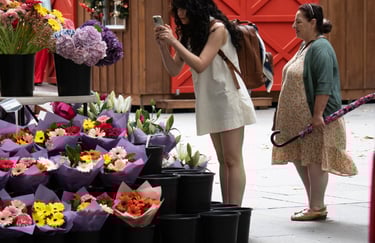
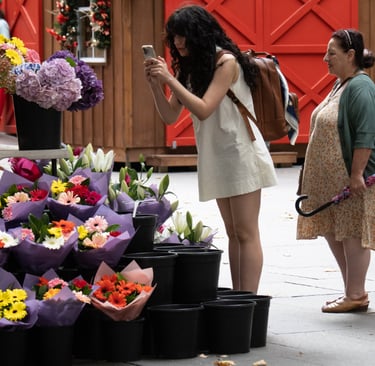
Fig. 3

Portfolio
Showcasing our best photography work for you.
Contact
Follow
trevor.reeves@iinet.net.au
0401 054 534
© 2025. All rights reserved.
Site last updated: 7 August 2026