
Sydney Street Photography


traveller's guide to Sydney street photography
How to spend 24 hours photographing Sydney
Sunrise: Circular Quay:
Lower George Street and Barangaroo
One of Sydney’s Light Rail lines (aka the tram) links Circular Quay with Central Railway Station and beyond and the service runs every five minutes. The first section (leaving the Quay) consists of the edge of the skyscrapers making up the city’s corporate area.
Next stop along the tram line is Wynyard station and entry to the adjacent Barangaroo, another business area which runs alongside Darling Harbour.
Martin Place - a must see - is close by along George Street and this segues into the main shopping area and the Queen Victoria Building (QVB) and Town Hall, then onto Chinatown and Central Station.


Shopping Precinct and up to Town Hall
Let’s continue up George St, armed with nothing but a camera and our motivation on this Sydney street photography shoot. Shopping areas do not excite me but of course there are people to photograph.
The next area is the main shopping precinct, centred around Pitt Street mall. You will probably want to take in the QVB, an upmarket shopping centre with quite beautiful decor over four levels. It is of the Victorian Romanesque style and was previously occupied by a produce market and the Central Police Court. The land was purchased by Sydney City Council when these uses ceased in 1891.
On the next block towards the Central Station are the Town Hall and St. Andrews Cathedral. Again, very impressive architecture.

Bridge side of the harbour
From this side, you can photograph the Opera House across the harbour, with a ferry or two in between if you prefer. If there is no ship at the passenger terminal, you can take the stairs and walk along the length of the terminal. This provides an elevated view of the Opera House and harbour.
Adjacent to the passenger terminal is the suburb called The Rocks. It's where European settlement in Australia effectively began - the First Fleet landed here in 1788, and the area takes its name from the sandstone outcrops that originally lined the shore. Throughout the 1800s it was a rough working port district full of sailors, warehouses, and (at times) organised gangs.
Wander around The Rocks – the part close to the harbour features shopping while the higher part is residential with the classic look of over a hundred years ago.
If you like photographing reflections and want a great one of the Opera House, meander along the boardwalk near the Park Hyatt Hotel and stop at the steps adjacent to the restaurant.

Opera House side of the harbour
Outside of winter months, when the ocean liners are arriving at the passenger terminal, the sight of ship, harbour bridge, and opera house (all in one view) do capture my imagination with a thrill. The view is from the elevated Circular Quay station, where I arrive from beyond the city centre.
Outside of winter, sunrise in Sydney ranges between about 5.30am and 6.30am – the best time of day, especially for photography.
I start by walking around to the Opera House, where thousands of images are captured each day. Its size is daunting, necessitating shooting from a distance. Imagination is required to make a photograph closer up, while still displaying the essence of the building.
Being a street photographer, one or two people on the steps are required to a) provide the size relativity and b) provide the human element. Later in the day there are hundreds of people. Those who have studied street photography will understand the idea of the “human element”.
From the Opera House there is the opportunity to photograph the Harbour Bridge, itself being lit by the rising sun on a clear day. And ample chances of capturing harbour ferries in the foreground.
Wynyard Station and Barangaroo
A short walk along George Street from Circular Quay will take you to Wynyard station on the right, which you can’t miss due to its huge opening. Multiple escalators descend to the train platforms and there is a pedestrian route to Barangaroo. An ascending escalator on the right of the entrance give you an elevated view of the entrance and is worth a look.
There’s not much to see if you descend to the platforms but it’s worth taking the short pedestrian tunnel through to the Barangaroo entrance, then down the escalator / steps to the locale's modern architecture. There’s not a specific location there to mention but the area is worthy of a stroll. When you descend to Barangaroo from the station exit, and walk straight ahead, you will see (to the right) Crown Towers which stands at a height of 271.3 metres (890 feet) with 75 floors. It is the tallest building in Sydney.

Wynyard Street and Martin Place
Wynyard Street with the small war memorial, and seats, adjacent to the Regiment coffee shop is one of my favourite spots. The reason is that (depending on the time of day) you can people-watch those waiting for their take-away coffees. Also people walking along George St and crossing over (especially at rush hour) between George St and Martin Place. There are some very pretty trees on the corner of George Street and the backdrop – ie looking down Wynard St and across the tram lines – show some of Sydney’s finest architecture.
On the corner of Martin Place and George St and stretching to Pitt Street is a beautiful sandstone building with clock tower. Take photos including the building or sit on the stone steps ready to steal a photo of a passerby. The building houses the General Post Office and the Fullerton Hotel.
Martin Place continues all the way on a slight ascent to Macquarie St and yet more stunning buildings lining that street on the Eastern side, including the NSW parliament and NSW Library. If you want to feel the sun on your face on a winter morning, head for Mcquarie Street.


If you'd like to explore Sydney City with me
China Town
Crossing over Bathurst Street and staying on George Street brings you on a gentle downhill towards Central Station. If you’re tired and want to get to the station, the tram will take you there at 11km per hour. That’s its average speed.
This is the beginning of the broader Chinatown – two streets west is Dixon Street, where the Chinese arch is, together with many Chinese restaurants. Turn right on Hay Street if you want to see Paddy’s Markets, Haymarket.
Turning left on Hay Street will take you to the picturesque Belmore Park. Bear right through the park to the station. There is Central Station.
What do you need for Street Photography?
You won't have to go out and buy another camera, though a compact one with 28-50mm focal length seems to be the camera of choice. There are several cameras sold as street cameras due to their small size and fixed lens. I've tried both a prime lens of 35mm and my 24-200mm zoom, and I prefer the zoom. This is because, for me, it adds flexibility such as capturing a street portrait from a distance. But the default focal length I use is 35mm, if I'm looking for a complex / layered shot.
It's entirely up to you...try both if you have them and see what you prefer. You might change over time, perhaps starting with a Zoom and then moving to a Prime. It also depends on which culture you are shooting in, a Western one or a developing country.
I’m not prescriptive about camera settings or about street photography. I’ve discussed elsewhere what my definition of this genre is, and I’ve provided a brief overview of the exposure triangle. I use manual settings myself, other than focus, which I set to auto. When I am stationary for a period of time, for example, setting up a more complex photograph using layers, I set focus manually. Then I set the aperture to about f8 / f11 to enable a focus zone with a deep depth of field.
The main thing, as with any genre of photography, is to shoot and keep shooting. Also, read about street photography and view others' work. I find now that, even with a fast shot (perhaps the norm in street photography), my framing comes from my subconscious, and while not perfect, it’s very good. It took a year or two before I achieved speed-framing.
Sydney Street Photography: Capturing the Heart of a City
Street photography is one of the barest of art forms one can find. No sets, no staging, no second takes — just a photographer, a camera, and everyday life. From the tourist magnet of Circular Quay you can walk up George Street serenaded by the trams, take in the business area and its suits, tackle the hubbub of the central shopping area, or glide through Chinatown.
Sydney's relationship with street photography stretches back nearly a century. In the 1930s, 40s, and 50s, commercial street photographers were a fixture of the city's busiest streets: George Street, Pitt Street, Martin Place, and Hunter Street. Armed with handheld cameras, these photographers would snap candid shots of passersby going about their daily lives. A card was handed to each subject so they could collect their developed print the next day, should they want to. It was spontaneous and slightly intrusive.
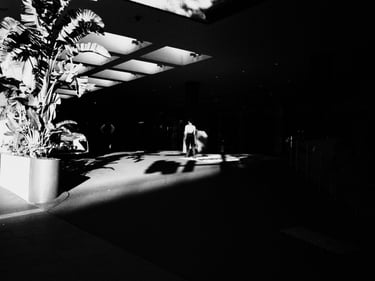
Sydney's light is well known among photographers. Glaring in Summer, harsh in winter, soft and diffused on overcast days, it sculpts faces and buildings in unusual ways. The city's cultural diversity — one of the most multicultural in the world — means that its streets reflect an extraordinary range of nationalities. There is no single "Sydney face”. There are hundreds.
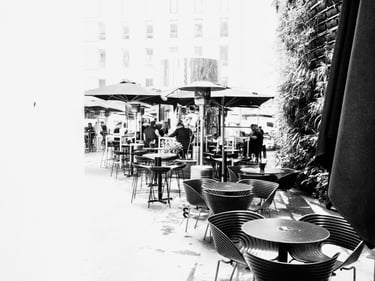
Street photography in Sydney also benefits from the city's unique geography. The interplay between harbour, skyline, and street-level life creates opportunities that are rare. And its myriad of coffee shops, many take-away, provide not just coffee, but backdrops for your street photography.
Getting Started
If you're new to street photography, Sydney is a generous city to learn in. Its pedestrian culture, long daylight hours, and visually stimulating environments make it ideal for building confidence with a camera. Join a local group, pick a neighbourhood, and simply walk.
As Sydney photographer Sam Ferris puts it, the city's light "reflects the beauty, struggle and strangeness of everyday life." All you have to do is raise your camera and look.
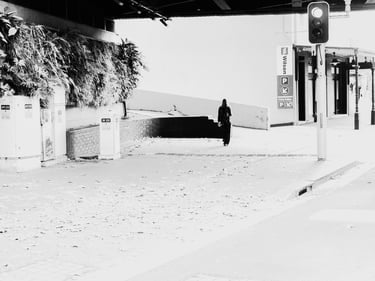
Sydney Street Photographs






Portfolio
Showcasing our best photography work for you.
Contact
Follow
trevor.reeves@iinet.net.au
0401 054 534
© 2025. All rights reserved.
Site last updated: 7 August 2026